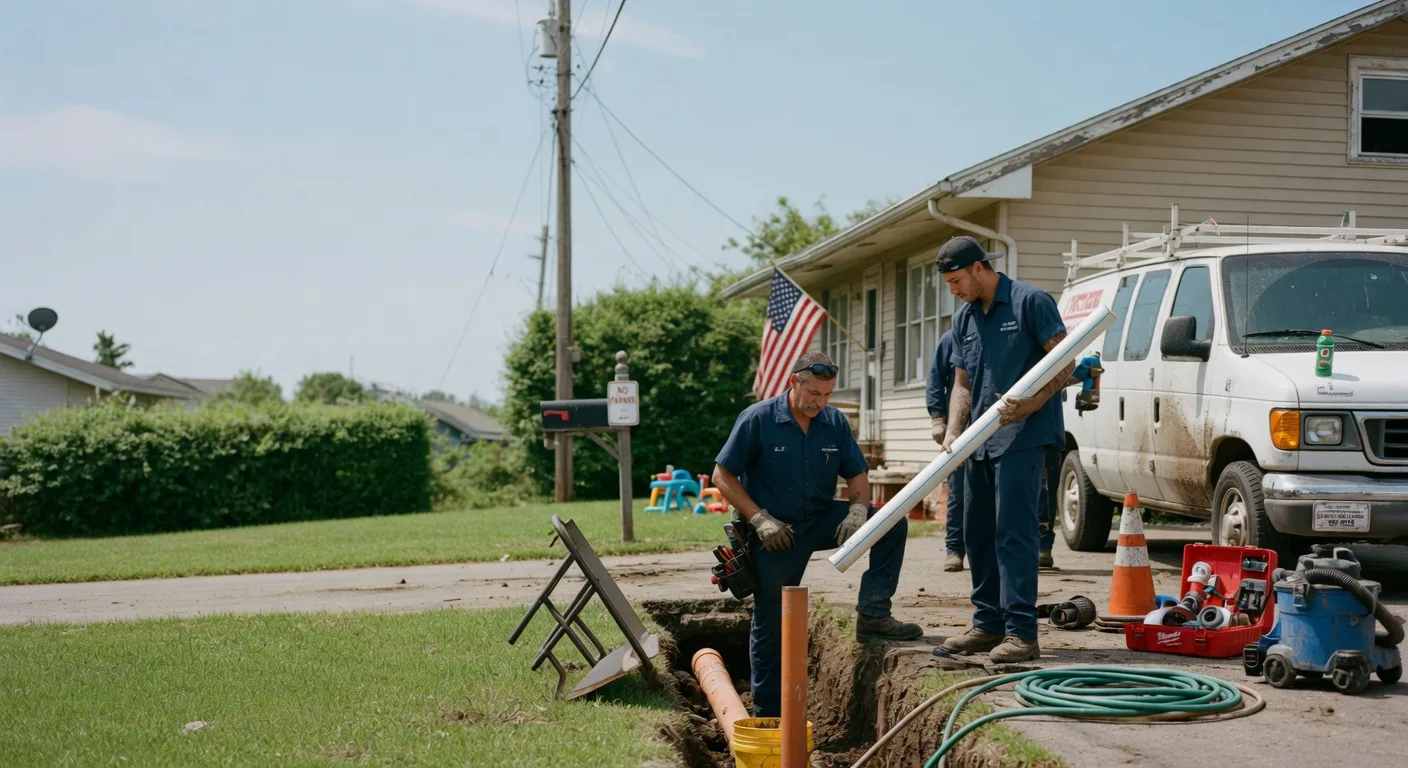
Why is one drain slow when the rest of the house is fine?
A single slow drain, like a bathroom sink or shower, almost always means a local clog close to that fixture. In a bathroom it is usually hair and soap scum matted just past the opening. In a kitchen it is grease that has cooled and hardened on the pipe wall, with food particles caught in it. The blockage sits in that fixture's own branch line, so nothing else in the house feels it. This is a cable machine job, because the cable punches a channel through the clog and restores flow. A safe homeowner check is to pull visible hair from the drain opening, or to clear the P-trap under a sink. If every drain in the house is slow or backing up together, the blockage is downstream in the main line, and that is a different job with different equipment. Root intrusion at a clay joint, a bellied section holding water, scale narrowing old cast iron, or a partly collapsed pipe can all cause it. If water rises in a tub when you flush the toilet, or a floor drain bubbles when the washer runs, stop running water and call. A plumber in Arlington, NE can tell which situation you have from a few questions.
Watch how the slow drain behaves over a few days, because the pattern tells you whether it is getting worse. A sink that drains a little slower each week is usually a clog that is still growing, and it is cheaper and easier to deal with early than after it stops completely. A drain that clears and then slows again within a day or two suggests buildup on the pipe wall rather than a single plug. A common mistake is pouring boiling water down a drain that has a plastic trap or plastic pipe, which can soften joints and loosen them. Another is pushing the clog further down with a stiff wire hanger, which can scratch the pipe or wedge debris deeper. If the slow fixture is the one closest to the main line, such as a ground floor tub, treat it more seriously, since it can be the first sign of trouble in the main.
Why did my drains stop working in freezing weather?
Every drain in the house is slow or dead, something is gurgling, and it started on a hard-frost morning. Where Arlington, NE gets a hard freeze, that usually points to ice in a pipe or ice at the top of the vent stack.
Frozen lines first. In colder states a sewer lateral can sit shallow enough for frost to reach it. Any sagging section holds a little water, and that water turns to ice. An un-insulated drain in a crawlspace or garage can freeze the same way.
Then the vent stack. Warm, damp air rises through the vent and meets freezing air at the roof opening. Frost builds ring by ring until the opening closes. With no air coming in, drains cannot flow. That is the gurgling you hear.
A frozen line and a root blockage look identical from inside the house. Both give slow drains and standing water. The weather, or a camera inspection, tells them apart.
Do not pour boiling water down a frozen line. Sudden heat can crack cast iron or split a trap, and then you have a leak too.
Safe homeowner check: see whether one fixture is slow or every drain is, look at the roof vent from the ground, and feel exposed pipe for a cold, stiff section.
Stop running water and call now if every drain is backing up, water is rising in a tub or floor drain, or you smell sewage. A single slow sink is usually a trap or branch job a cable machine can clear. A whole-house freeze-up or a suspect lateral may need a camera inspection, thawing equipment or hydro jetting, which is where emergency drain cleaning comes in.
Expert Plumbers Co is a referral service. We connect you with an independent local plumber in Arlington, NE. Call (380) 262-9173.
Once the thaw is done, expect the problem to come back unless the cause is fixed. If a shallow section froze, ask the plumber to note its depth and whether the pipe has a belly that holds water, since that spot will freeze again. A cold crawlspace or garage drain can be wrapped with pipe insulation, and heat tape made for drain lines can help in short cold snaps, but it must be installed to the maker's instructions. For a frosted vent, keep snow clear around the roof opening, and tell the plumber if the vent is narrow, since a wider vent closes up less quickly. In older homes the vent opening is often smaller and the drains less well insulated, so the same cold snap hits harder. After a freeze, watch for leaks at joints and traps as the ice melts, because expanded pipe can split quietly and only show water once it warms. If you see damp spots later, tell the plumber what happened.
My dishwasher leaves standing water at the bottom and the kitchen sink is slow too. Are they connected?
Yes, most of the time. The dishwasher drains into the same pipe as the kitchen sink, usually through the disposal or a connection on the tailpiece. If that shared pipe is partly blocked, both will slow down, and the dishwasher shows it first because it cannot push water out against the restriction.
Grease, food residue and soap film coat the inside of the kitchen drain and narrow it over time. A garbage disposal can pack ground food into that narrow spot. The result is water that sits in the bottom of the dishwasher after a cycle and a sink that empties slowly.
Safe checks you can do: look at the dishwasher filter at the bottom and clear any food. Check that the drain hose is not kinked behind the machine. If you have a disposal, make sure the knockout plug was removed when the dishwasher was installed. Run the disposal with cold water and see whether the sink drains better. Take off the trap under the sink with a bucket below, and clear what is in it. Skip chemical cleaners, which can damage the dishwasher hose and the disposal.
If the filter and trap are clean and both problems remain, the blockage is further down the kitchen line. A cable machine often clears a soft plug of grease and food. If it returns in a few weeks, grease on the pipe wall is the likely cause, and hydro jetting cleans the wall where a cable only cuts a hole through it. A camera inspection can show a sag, a damaged joint or roots further along.
Stop running the dishwasher and call if dirty water comes up in the sink during a cycle, if other drains in the house are also slow, or if you smell sewage.
If the sink drains fine once the dishwasher is off and the problem is only the machine, the cause may be in the appliance, such as the pump or drain hose, and that is a job for an appliance technician rather than a plumber.
Cost depends on access under the sink, how far the blockage sits, whether a cleanout is available, and how much has to be opened or replaced.
Expert Plumbers Co can connect you with an independent local plumber in Arlington, NE when you call (380) 262-9173.
The furnace or air conditioner drains into my basement floor drain and now it overflows. Is that a drain cleaning job?
"The furnace drains into my basement floor drain and now it overflows." That is a common one, and it is a drain problem with two parts. The overflow can come from either end: the small condensate line, or the floor drain it empties into.
Condensate lines clog with algae and sludge. Once it blocks, water backs up at the unit or spills from the line onto the floor. Many systems also have a trap on that line, and the trap is the first place sludge collects.
The floor drain itself can be the problem. If it is slow or backs up when you run the washer or a tub upstairs, the cause is in the house drain: grease build-up, a bellied line holding water, or root intrusion at a clay joint further out.
One slow floor drain, with the rest of the house draining fine, usually means a local blockage in that branch. Every drain in the house backing up, or the lowest drain gurgling and rising while others run, points to the main line or a failed sewer lateral.
Safe homeowner check: Look at the pipe from the unit. Is water standing in the pan or trap? Pour a bucket of water into the floor drain and watch how fast it goes. Do not pour bleach or drain chemicals into the condensate line without knowing the unit's instructions.
Stop running water and call now if the floor drain is bringing up sewage or a sewer smell, other drains in the house are slow or gurgling, water is spreading toward electrical equipment or the furnace, or the overflow comes back soon after you clear it.
A cable machine is often enough for a plain clog in the floor drain branch. A condensate line is a different job: it needs flushing or clearing at the line and trap, and may need a cleanout fitting added. If the floor drain keeps backing up, a camera inspection shows whether the main line has roots or a belly. Hydro jetting is used when grease or scale coats the pipe wall.
Expert Plumbers Co is a referral service. We connect you with an independent local plumber in Arlington, NE. Call (380) 262-9173.
Ask the plumber to check both the condensate line and the floor drain, and to explain which one failed. Ask whether the condensate should drain somewhere else, since rules vary by area on where it may discharge. Cost depends on access, the parts needed, how much has to be opened up or removed, and any permit or code requirement.
Will baking soda and vinegar, or a kettle of boiling water, clear a slow drain?
You have a slow drain, so you tried baking soda and vinegar, or a kettle of boiling water. It still crawls, or the clog is back by morning. That is the usual result.
The fizz is mild. It can freshen a drain, but it does nothing to a solid clog of hair, soap scum, grease or paper. Boiling water melts grease for a moment, then the grease cools and sets again further down the pipe, where it is harder to reach. Boiling water can also soften PVC joints and crack porcelain. Hot tap water is safer than a kettle.
The real causes sit deeper: grease build-up on the pipe wall, scale in old cast iron, roots entering a clay joint on the main, or a bellied line that holds water and solids at its low point. A blocked vent stack can also make a drain sluggish and gurgling, which looks like a clog but is an air problem.
Count the affected drains. One slow fixture usually means a hair, soap or grease clog in that fixture or its branch. If the tub, sinks and toilets all run slow together, or you hear gurgling after a flush, the trouble is in the main line or vent, and no kitchen remedy will reach it.
Safe homeowner check: Remove the stopper or strainer and clear hair and residue by hand. Try a plunger with a good seal. Run hot tap water, not boiling. Check whether other fixtures are slow. Avoid stacking store-bought chemical cleaners, which can sit in a standing pipe.
Stop running water and call now if more than one fixture is backing up, if dark water is rising in a tub or floor drain, if you smell sewage, or if water comes up when you flush or drain the washer.
A cable machine is usually enough for a clog in a single branch. Hydro jetting is the better tool when grease or scale coats the pipe wall. A camera inspection is the right step when the drain clears and slows again within days, since that pattern points to a belly, roots or a damaged section.
Expert Plumbers Co is a referral service. We connect you with an independent local plumber in Arlington, NE. Call (380) 262-9173.
Tell the plumber what you already tried. Ask what they found in the line, not only that it was cleared. The scope depends on access to the pipe, whether a fixture has to be removed, the pipe material, and whether the cause is a simple clog or damage that needs repair.